01
Payload class
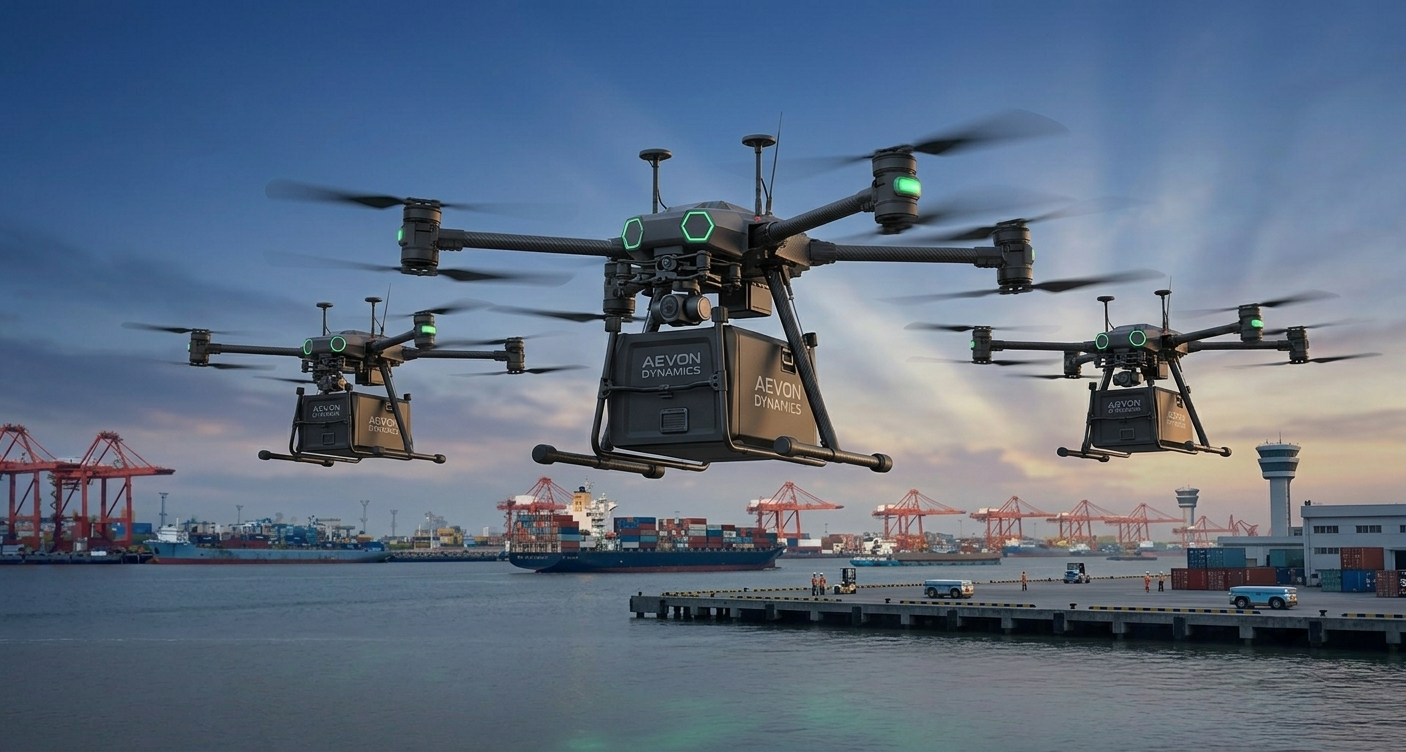
Two kilograms of lift buys a camera, and a camera can only report. A hundred buys light over the whole scene, a voice across it, and a person carried off a ledge.

The world built machines that see and think. It did not build the machines that go to the place that matters and act. We build those.
SAFETY ROBOTICS · MODULAR MISSIONS · BUILT IN INDIA
India has spent a decade building the eyes and the brain of its physical systems — camera networks, analytics, command centres that watch a city and report the moment something goes wrong.
What it does not have is anything that can then reach the place and do something about it. The alert arrives. The response is still a human being, on foot, arriving too late. A system that can see but cannot act is a very expensive way to watch.
We build the layer that acts.
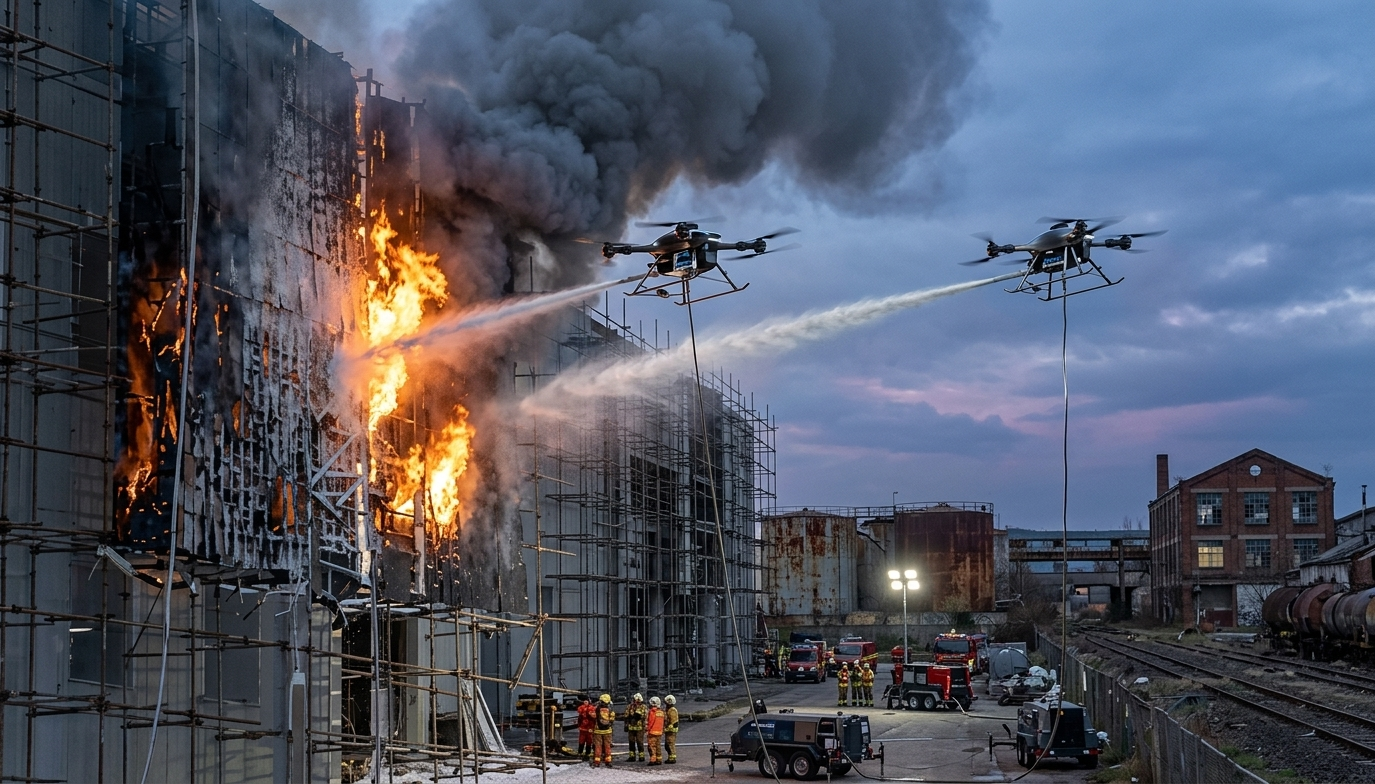
Almost every robot sold into public safety today is a sensor with rotors. It arrives, it watches, it reports, and then somebody still has to walk in. Ours arrive able to change what happens: enough carrying capacity for real equipment — light, voice, cameras, a winch, a stretcher — and a mount that lets a force decide what the aircraft is for on the morning of the incident rather than at the time of purchase.
01
Two kilograms of lift buys a camera, and a camera can only report. A hundred buys light over the whole scene, a voice across it, and a person carried off a ledge.
02
A force learns one aircraft, one ground station, one drill. After that a new capability is different equipment on the same mount — not another aircraft and another year of training.
03
Designed and built in India, for monsoon and dust and lanes a tender cannot enter. A platform tuned somewhere else and localised afterwards is a different machine wearing the same name.
04
Nothing the aircraft does requires anyone to get closer. The light, the voice, the camera, the dispersal, the lift — each is built to work at standoff, because proximity is the thing that injures people at an incident. Other machines shorten the response. This one removes the reason to approach.
Six domains where the difference between an outcome and a casualty is whether anything could reach the place in time. Each is a different emergency and a different force, and each still ends with a person walking in.
See, address, disperse and rescue from a crowd without an officer entering it.
Reach the floors ladders cannot, from outside the structure.
Locate and lift people out of zones ground teams cannot enter.
Persistent aerial patrol over perimeters too long to hold with people.
Dual-use heavy-lift for logistics, resupply and standoff operations.
Move real weight to places roads and cranes cannot reach.
Fire alone killed 5,888 people in India in a single year. Thousands of officers are injured every year holding lines at gatherings that turned. Behind almost all of it is one mechanic: the only way anybody has ever had to reach a person in trouble is for another person to walk in and get them.
The walking in is not the failure. It is the part of the system that works. Crews climb past the floor the ladder reached. Officers stand in front of a crowd with nothing between them and whatever comes back. Responders cross slabs that may not hold, because somebody is under them. That willingness is the most reliable thing in Indian public safety, and it is also the thing that absorbs the injury.
So we build the machine that goes in first. It carries the light, the voice, the sensors and the winch to the place, and it does the part of the job that only ever required a person because nothing else could get there.
The exposure moves to the machine. The judgement stays with the people.
Aevon is a small team of engineers with one working rule: solve the problem that exists, not the one that is convenient to build for. We sit with the people who face it — the officer at the crowd, the crew below the fire floor — ask what actually fails, and engineer against exactly that. The first machine built this way is on the bench now.
If you want your work to matter at the worst hour of somebody’s day, write to us.
Built in India, flown for the people who go in.